
I. Product Overview
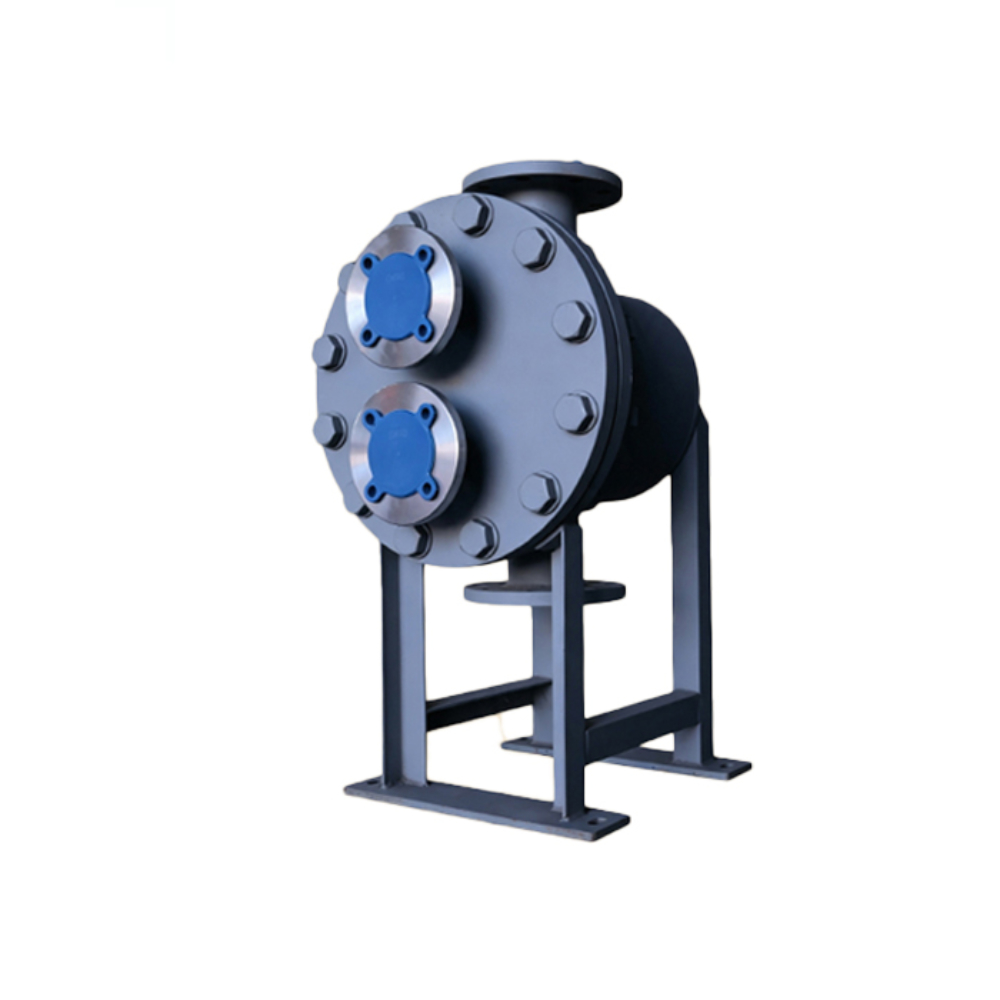
A plate-and-shell heat exchanger consists of two parts: an internal plate bundle made of welded corrugated plates, and an external cylindrical shell. The plate-side medium flows in the channels inside the plate bundle, while the shell-side medium flows inside the shell and outside the plate bundle. The two exchange heat through the plate walls.
The purpose of this structural form is clear: to put the high heat transfer efficiency of a plate heat exchanger into the pressure-bearing shell of a shell-and-tube heat exchanger. Corrugated plates provide a relatively high heat transfer coefficient and small volume, while the cylindrical shell provides large-flow passages and relatively high pressure-bearing capacity. Therefore, it is often used in applications with large flow, high pressure, and a desire to control equipment size and investment. It has mature applications in refining and chemical units such as hydrogenation, reforming, and atmospheric and vacuum distillation, as well as in power plant feedwater heating systems.
II. Structure and Working Principle
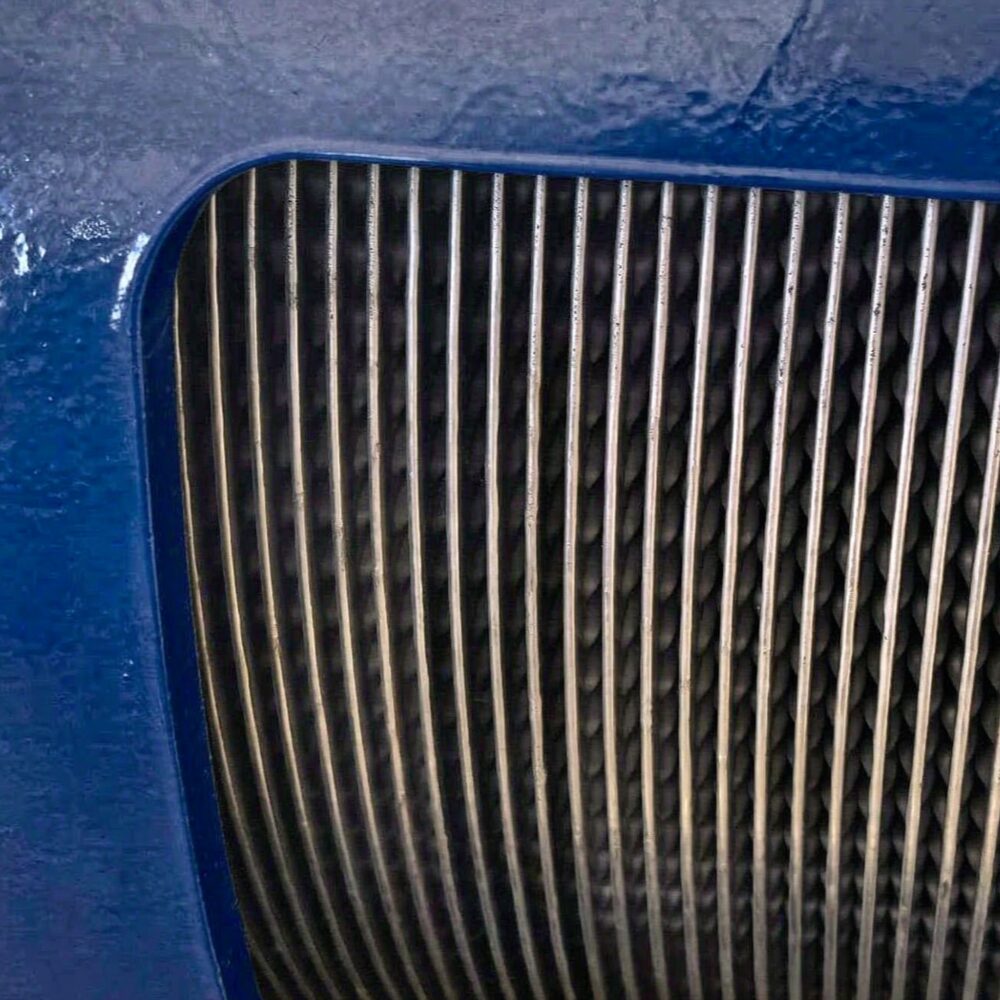
The plate bundle is formed by stacking and welding multiple corrugated plates. The plate edges are sealed by fusion welding, forming alternating plate-side channels inside. The plate bundle is installed as a whole into the cylindrical shell, and its two ends are connected to the shell or header to form independent shell-side flow passages. The shell-side flow cross-section is formed by the space between the outer contour of the plate bundle and the inner wall of the shell. The flow direction is usually arranged in countercurrent or cross-flow relative to the plate side.
Component Function
Plate bundle Heat transfer core, welded into an integral unit from corrugated plates
Shell (cylinder) Contains shell-side fluid and bears shell-side pressure
Plate bundle-to-shell connection Welded fixed connection or detachable flange connection
Header / head Distributes plate-side fluid and connects nozzles
Expansion joint Absorbs thermal expansion difference between plate bundle and shell
Nozzles and flanges Medium inlet and outlet
The plate bundle is a welded structure, and the medium does not contact rubber parts. The shell side is a cylindrical pressure-bearing structure, and its pressure rating is not limited by plate thickness. This is the key difference from gasketed plate heat exchangers.
III. Technical Features
Relatively high heat transfer coefficient
Corrugated plates cause turbulence in the plate-side fluid, and the heat transfer coefficient is usually higher than that of plain-tube bundles in conventional shell-and-tube heat exchangers. For the same heat duty, the required area is smaller.
Relatively strong shell-side pressure-bearing capacity
The shell side bears pressure through the cylinder, and its pressure-bearing capacity does not depend on plate thickness, so it can be used for medium- and high-pressure conditions. Plate-side pressure-bearing capacity is limited by the welded structure of the plate bundle and must be determined according to the structural scheme.
Suitable for high-temperature conditions
The plate bundle is sealed by fusion welding and has no rubber parts. The design temperature can be relaxed according to the plate material, making it suitable for medium- and high-temperature process heat exchange.
Compact structure and small footprint
For the same heat transfer duty, both the diameter and length of the equipment are smaller than those of conventional shell-and-tube heat exchangers, which is advantageous for plant revamps and space-constrained projects.
Relatively low shell-side pressure drop
The shell-side flow cross-section is relatively large, and a relatively low pressure drop can be achieved while meeting heat transfer requirements. It is suitable for large-flow process gas or circulating water systems.
Plate side is inconvenient for mechanical cleaning
The plate bundle is a welded integral structure, so the plate-side channels can only be chemically cleaned. During selection, the fouling tendency of the plate-side medium must be confirmed, and pre-filtration or other measures should be provided when necessary.
IV. Structural Forms
Type Structural description Application
Fixed type Plate bundle and shell are welded; the whole unit is non-detachable Clean media, mainly chemical cleaning
Detachable type One end is flange-connected; plate bundle can be withdrawn Plate bundle surface needs inspection or mechanical cleaning
With expansion joint Expansion joint provided at shell or nozzle Large temperature difference between plate bundle and shell
During selection, first confirm the cleanliness of the media on both sides and the cleaning method, then determine the connection form. Where the plate side is the product side and the shell side is a utility, the fixed type is usually preferred to simplify the structure.
V. Technical Parameters (Design Reference Values)
Item Range
Heat transfer area per unit 10–1500 m²
Plate thickness 0.6–1.0 mm
Plate-side channel width 2.0–4.0 mm
Design pressure Plate side determined by plate bundle structure; shell side 1.0–6.4 MPa
Design temperature −50–450 °C (depending on plate material)
Heat transfer coefficient 2500–5000 W/(m²·K) (reference value for water-water conditions)
Capacity per unit 10–3000 m³/h
Applicable standards GB/T 151 Heat Exchangers; export projects can be executed according to agreed standards
The above are conventional ranges. Actual parameters are determined by calculation based on working conditions and are subject to the technical agreement and drawings. The pressure ratings of the plate side and shell side must be calculated separately.
VI. Material Selection
Material Applicable conditions
304 Neutral media; not suitable for high-chloride conditions
316L General chemical media, weak acids and alkalis; contains molybdenum for pitting resistance
321 High-temperature conditions; intergranular corrosion resistance
Duplex steel 2205 Chloride-containing and sulfur-containing media; stress corrosion resistance
254SMO High-chloride, strongly corrosive media
Titanium Seawater, oxidizing media
The shell and plate bundle can be made of different materials: when the shell-side medium is less corrosive, the shell can be made of carbon steel or low-alloy steel, with only the plate bundle using stainless steel, to control cost.
VII. Manufacturing and Quality Control
Stage Control points
Plate forming Control of corrugation depth and springback accuracy to ensure uniform weld seam gap
Plate bundle welding Mainly laser welding; control heat input and welding deformation to ensure plate bundle flatness
Plate bundle assembly Stacking sequence, channel alignment, and machining of end sealing surfaces
Plate bundle-to-shell connection Welding or flange connection; control coaxiality and sealing surface accuracy
Pressure test Hydrostatic and air tightness tests separately for plate side and shell side
Inspection Weld appearance inspection; penetrant testing or helium leak testing as required
Documentation Material certificates, test records, certificate of conformity, operation manual
Welding deformation control of large-size plate bundles is the main process difficulty of this type of equipment. The flatness of the plate bundle directly affects the assembly accuracy with the shell and the sealing reliability.
VIII. Applicable Working Conditions and Industry Applications
Refining: reaction effluent/mixed feed heat exchange in hydrocracking and hydrotreating, overhead heat exchange in atmospheric and vacuum distillation, feed/effluent heat exchange in catalytic reforming
Petrochemical: ethylene plants, aromatics plants, feed/effluent heat exchange of large reactors
Chemical: process gas cooling in ammonia and methanol plants, heat exchange in large reaction systems
Power: feedwater heating, auxiliary equipment cooling
Seawater desalination and metallurgy: large-flow heat exchange links
Selection criterion: large flow (large shell-side cross-section requirement), relatively high pressure (beyond the capability of gasketed plate heat exchangers), and a desire to control equipment volume and investment—when all three hold simultaneously, the advantages of the plate-and-shell type are relatively obvious. If the pressure is not high, the medium is clean, and detachable cleaning is required, a gasketed plate heat exchanger is more economical; if the medium contains solids and is prone to blockage, a tubular or spiral plate heat exchanger is more suitable.
IX. Comparison with Shell-and-Tube and Gasketed Plate Heat Exchangers
Item Plate-and-shell Shell-and-tube Gasketed plate
Heat transfer coefficient Relatively high Relatively low Relatively high
Shell-side pressure-bearing Relatively strong (cylindrical pressure-bearing) Strong Weak, limited by gasket
Plate-side cleaning Chemical cleaning Mechanical cleaning possible Mechanical cleaning possible
Volume Small Large Smallest
Large-flow adaptability Relatively good Good General
Cost Relatively high Medium Relatively low
X. Parameters Required for Selection and Service Process
To be provided: names and composition of media on both hot and cold sides, flow rates, inlet and outlet temperatures, operating pressure and design pressure of plate side and shell side, design temperature, allowable pressure drop, medium cleanliness and fouling tendency, chloride ion concentration and pH, installation form and space constraints, and whether detachability is required.
Service process: Working condition confirmation → process calculation and selection → scheme and drawings → technical agreement → manufacturing → factory inspection → delivery and technical support
XI. Company Overview
Shanghai Jiangxing Chemical Equipment Co., Ltd., located in Jiading District, Shanghai, focuses on the design and manufacturing of heat exchange equipment. Its products cover two major categories—plate type and tubular type—with ten varieties in total, including fully welded plate, four-side detachable fully welded, detachable plate, and brazed plate heat exchangers, as well as plate-and-shell, shell-and-tube, volumetric, spiral-wound, finned-tube, and spiral plate heat exchangers, and accessories such as plates and rubber gaskets.
The company is equipped with a 10,000-ton hydraulic press and has independent production capacity for plates and pressed parts. It has passed ISO 9001 quality management system certification and obtained CE certification. Its products have been exported to more than 80 countries and regions, with many years of export experience. It currently has more than 390 product specifications and can undertake non-standard customization.
The plate bundle of the plate-and-shell heat exchanger shares the plate forming and laser welding processes with the fully welded plate heat exchanger. Under a multi-product parallel manufacturing system, comparisons can be made among plate-and-shell, shell-and-tube, and plate heat exchangers according to process conditions, and the matching model can be recommended based on pressure rating, flow rate, and medium characteristics.
COMPANY PROFILE

Founded in 2010.Shanghai Jiangxing Chemical Equipment Co.,Ltd. is located in——Shanghai,China. We specialized in manufacturing series of plate heat exchangers, fully weldedheat exchangers,heat exchanger units, replacements of plates and gaskets,brazed plate heatexchangers. Our plate heat exchangers are quality reliable and equivalent to the products fromworld well-known manufacturers. We also supply high quality OEM heat exchanger gaskets( EPDM, NBR & VITON ) and heat exchanger plates(Stainless Steel, Titanium, Hastelloy ) forplate heat exchanger ordinary maintenance.
EXHIBITION & CUSTOMER

CERTIFICATES

Why Choose Us

FAQ
1.Can l have your samples?
Yes, we can provide samples for you to check our quality.
2. What is your leading time for the products l need?
enerally 7 working days. lt depends on the quantities you request.
3.Do you have your own factory?
Yes, welcome to visit our factory and check our products.
4. What is the warranty for your products?
We provide one year warranty for all the items we sold.
5.What payment terms do you accept?
Trade Assurance/TT/ Letter of Credit/ Western Union
