
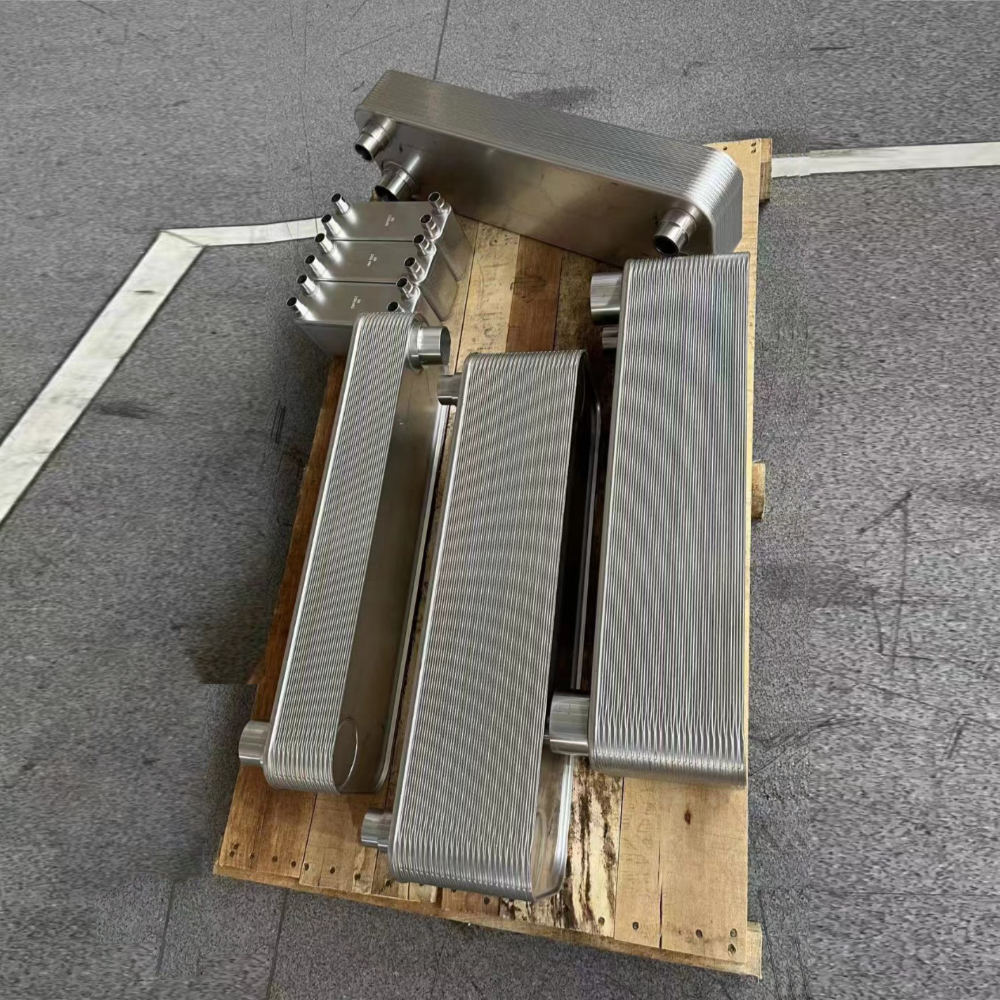
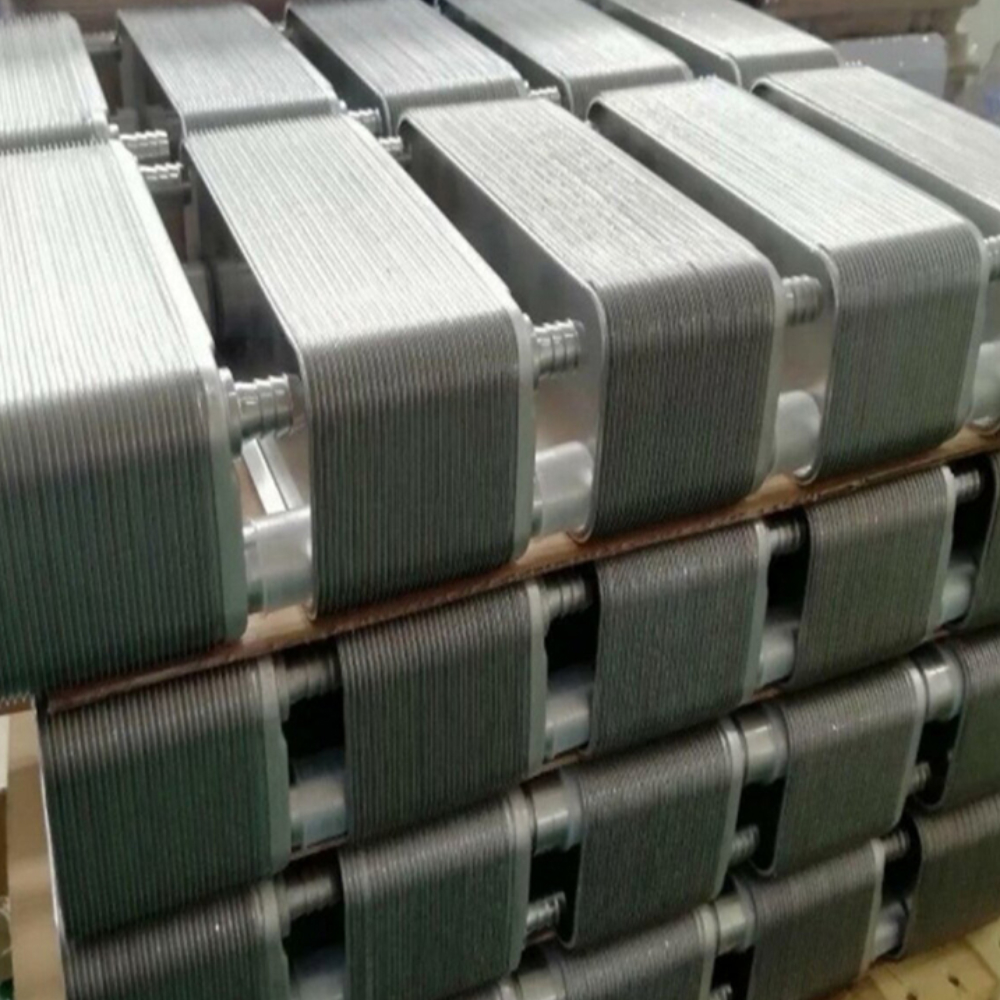
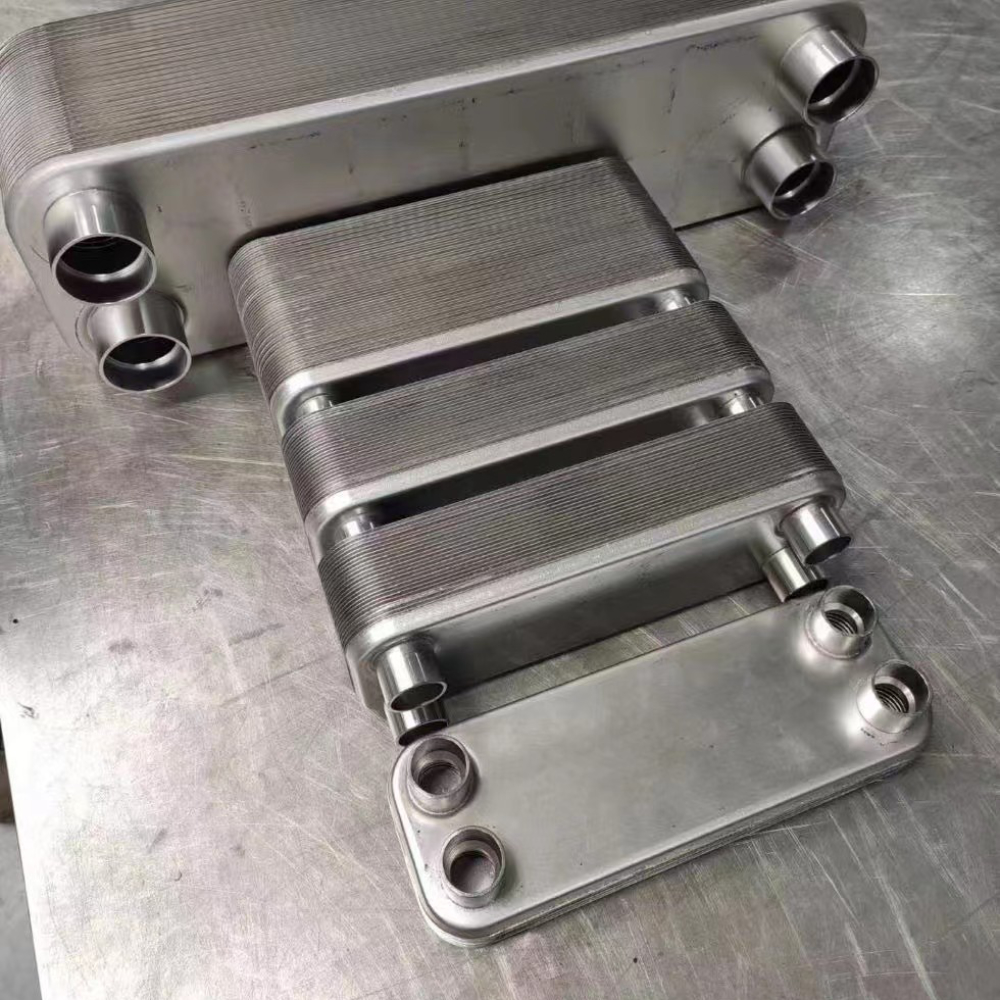
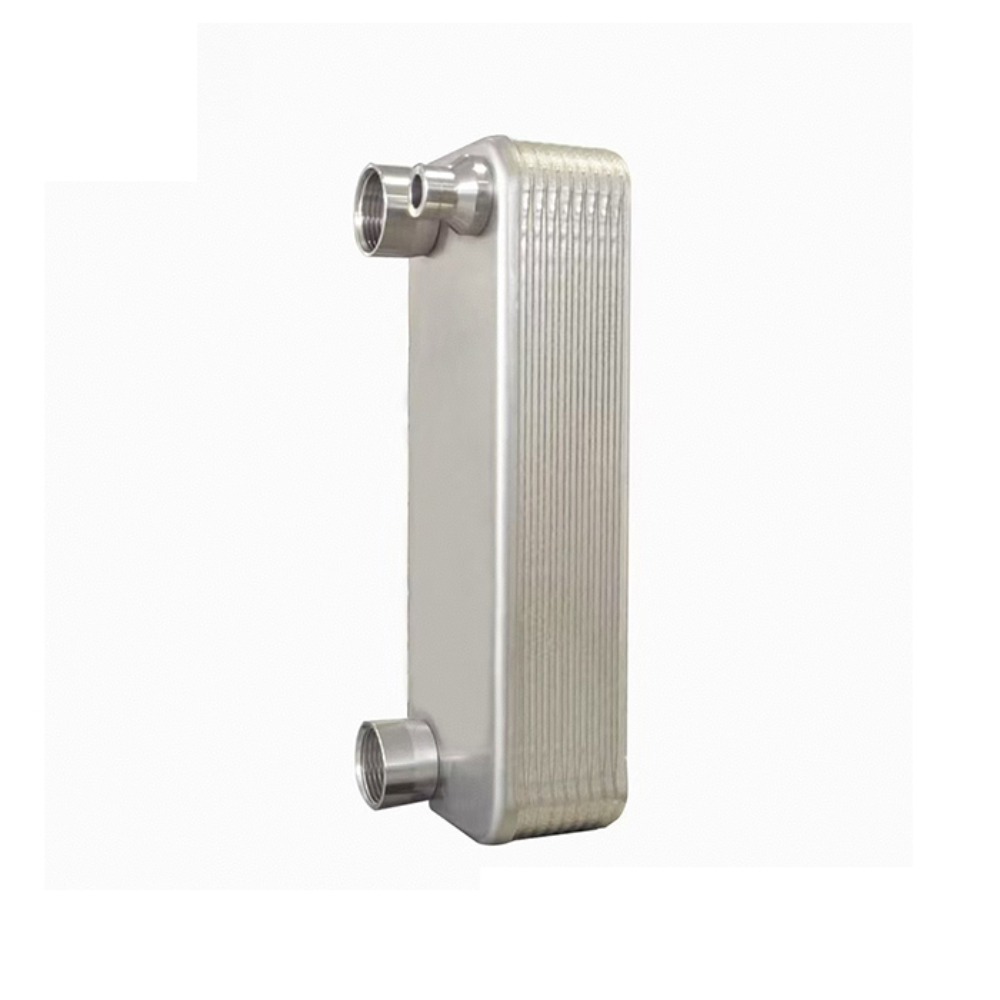
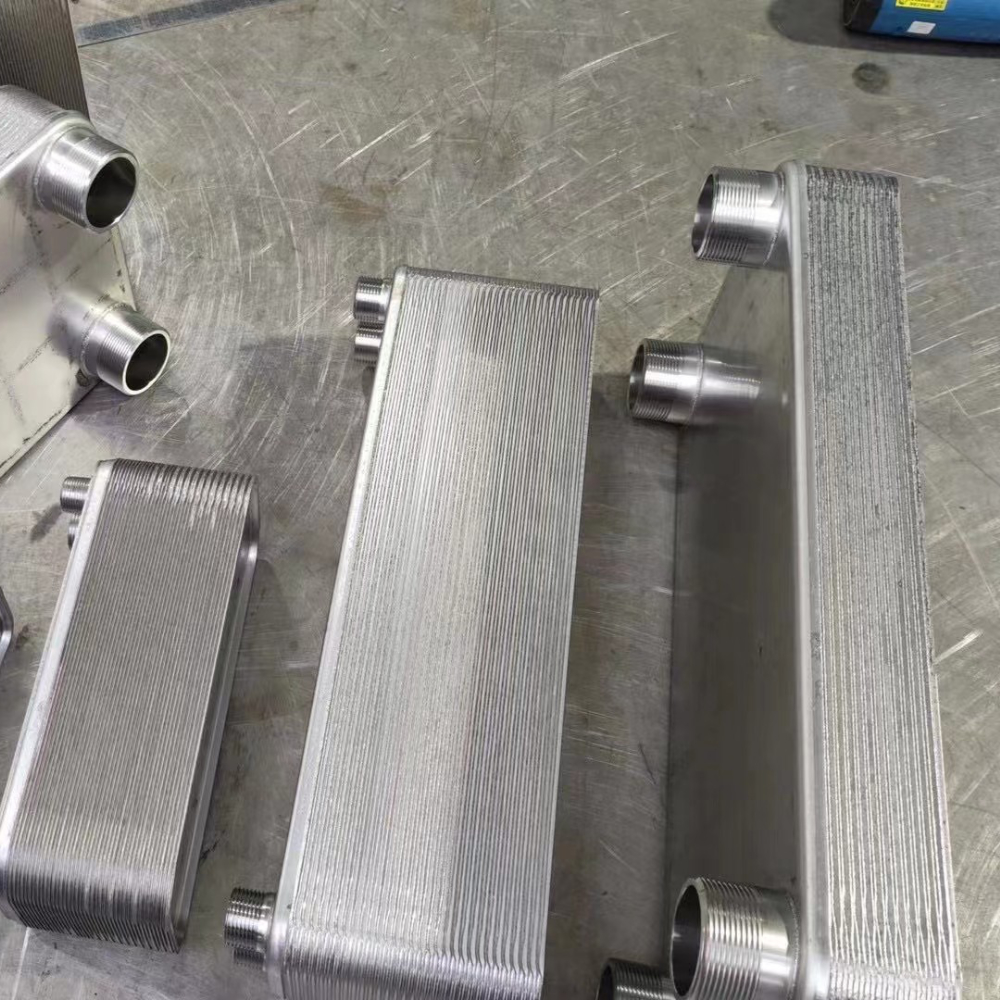
Fusion-welded sealing replaces rubber gaskets, making it suitable for high-temperature, high-pressure, and media conditions incompatible with rubber.
I. Product Overview
A fusion-welded plate heat exchanger consists of a stack of corrugated stainless steel plates. The plate edges are sealed by fusion welding, without using rubber gaskets. Hot and cold media flow countercurrently in adjacent channels and exchange heat through the plate walls.
The heat transfer efficiency of a plate heat exchanger comes from the turbulence formed by corrugated plates, while its application boundaries have long been constrained by gaskets: the temperature resistance, pressure resistance, and media compatibility of rubber determine where gasketed plate heat exchangers can be used. After the fusion-welded structure eliminates gaskets, these three boundaries are extended outward simultaneously, and the gasket—a consumable that must be repeatedly replaced during the equipment’s service life—is eliminated.
The trade-off is that the channels can no longer be opened for mechanical cleaning, and the maintenance method changes to chemical cleaning. This trade-off determines its applicable scenarios and is also the first point that needs to be confirmed during selection.
II. Applicable Working Condition Boundaries
Before selection, it is recommended to use the following four items for a preliminary judgment:
Working condition characteristic Whether the fusion-welded structure is applicable
Design temperature exceeds 180 °C Applicable; fusion welding can reach 400 °C (depending on plate material)
Design pressure exceeds 2.5 MPa Applicable; plate-pair type can reach 4.0 MPa
Media incompatible with rubber gaskets (solvents, ketones, esters, concentrated acids, ammonia, etc.) Applicable; no rubber parts contact the media
The system does not allow rubber parts (clean and sterilization conditions) Applicable
Shell side is prone to fouling and requires periodic extraction for mechanical cleaning Four-side detachable structure should be used instead
Mild working conditions and frequent disassembly/inspection required Gasketed type is more economical
If any one of the first four items holds true, the gasketed type can basically be ruled out; if the last two items hold true, a specific type within the fusion-welded structures needs to be selected.
III. Technical Features
Gasket-free structure; media compatibility is not limited by rubber
Sealing is provided by weld seams, which do not have compatibility issues with media. It can be used for solvents, ketones and esters, concentrated acids, ammonia, refrigerants, and other media.
Wider temperature and pressure boundaries
The design temperature can reach 400 °C, and the design pressure can reach 4.0 MPa (plate-pair type), covering most medium- and high-temperature and medium- and high-pressure heat exchange conditions in the chemical industry.
High heat transfer coefficient and compact structure
The turbulence formed by corrugated plates gives a higher heat transfer coefficient than shell-and-tube heat exchangers. For the same heat duty, the footprint is smaller, making it suitable for retrofit projects with limited space.
No aging consumables
Gaskets are components that need to be replaced multiple times during the life cycle of a plate heat exchanger, and replacement involves downtime. The fusion-welded structure eliminates this maintenance expense and downtime risk.
Leakage can be designed to be detectable
Double weld seams and leak detection grooves can be provided between plate pairs. In the event of internal leakage, the medium first leaks out through the leak detection groove, making it easy to detect before the impact expands.
Small end temperature difference
The countercurrent arrangement allows the end temperature difference to be controlled within a small range, making it suitable for waste heat recovery and precise temperature control applications.
IV. Structural Forms
Type Structural description Applicable conditions
Plate-pair fusion-welded Two plates are welded into one channel unit; multiple plate pairs are stacked in series and enclosed in an outer frame Small-to-medium flow, medium-high pressure, compact structure
Plate-and-shell Plate bundle is installed in a cylindrical shell; plate side flows through the plate bundle, shell side through the shell Large flow, high temperature and high pressure; can replace shell-and-tube type
Four-side detachable fusion-welded Welded plate bundle can be pulled out as a whole from the frame High-temperature and high-pressure conditions requiring mechanical cleaning
Semi-welded One side fusion-welded, one side gasket-sealed Applications requiring prevention of cross-contamination while also requiring disassembly and cleaning
Among them, the four-side detachable structure solves the problem that fusion-welded equipment is inconvenient for mechanical cleaning: sealing is still provided by weld seams, and the plate bundle can be pulled out for cleaning during maintenance. It is suitable for processes that require both temperature and pressure resistance and periodic cleaning.
V. Technical Parameters
Item Range
Heat transfer area per plate 0.05–3.0 m²
Heat transfer area per unit 1–1500 m²
Plate thickness 0.5 / 0.6 / 0.8 / 1.0 mm
Channel width 2.0–4.0 mm
Design pressure Plate-pair type 2.5–4.0 MPa; plate-and-shell shell side can be higher
Design temperature −50–400 °C (depending on plate material)
Heat transfer coefficient 3000–6000 W/(m²·K) (reference value for water-water conditions)
Capacity per unit 1–3000 m³/h
Connection types Flange, welded, threaded (configured according to piping standards)
Applicable standards GB/T 151 Heat Exchangers; export projects can be executed according to agreed standards
The values in the table are conventional ranges. Actual parameters are determined by calculation based on working conditions and are subject to the technical agreement and drawings.
VI. Material Selection
Material Applicable conditions Notes
304 Neutral media, clean water Not suitable for high-chloride conditions
316L General chemical media, weak acids and alkalis Contains molybdenum; pitting resistance better than 304
321 High-temperature conditions Intergranular corrosion resistance
2205 duplex steel Chloride-containing and sulfur-containing media Good stress corrosion cracking resistance
254SMO High-chloride and strongly corrosive media Suitable for conditions with relatively high chloride ion concentration
Material selection requires the simultaneous provision of media composition, chloride ion concentration, maximum temperature, and pH value. Chloride tolerance decreases as temperature increases; a single concentration value is not sufficient to support a judgment.
VII. Welding Process and Quality Control
The reliability of a fusion-welded plate heat exchanger is concentrated in the weld seams. Process control is as follows:
Stage Control content
Plate forming Control of corrugation depth and springback accuracy to ensure uniform weld seam gap
Pre-weld treatment Ultrasonic cleaning of plates to remove oil and avoid weld porosity
Welding method Mainly fiber laser welding, with a small heat-affected zone and small deformation; TIG argon arc welding for thick plates and repair welding
Post-weld treatment Pickling and passivation to restore the corrosion resistance of weld seams and heat-affected zones
Factory inspection Air tightness test and hydrostatic test for each unit; helium leak test additionally for critical conditions; penetrant testing as required
Documentation Material certificates, test records, certificate of conformity, and operation manual can be provided
The precision of plate pressing and forming is directly related to weld seam quality: inconsistent corrugation depth will lead to an uneven weld seam gap and affect penetration consistency. Therefore, this type places relatively high requirements on the coordination between the two processes of plate pressing and welding.
Note: Fusion-welded structures do not have on-site welding conditions, and weld repairs must be performed by the manufacturer. When inquiring, it is recommended to confirm the repair turnaround time and spare parts policy at the same time.
VIII. Application Fields
Chemical and petrochemical: reactor cooling, overhead condensation, solvent condensation, steam condensate waste heat recovery
Fine chemicals: heat transfer oil systems, high-temperature material heat exchange, heat exchange for strongly corrosive media
Pharmaceuticals: clean heat exchange without rubber parts, sterilizable conditions, process cooling
Refrigeration and air conditioning: refrigerant systems, heat exchange links where leakage is strictly prohibited
Power and metallurgy: oil coolers, circulating water heat exchange, auxiliary equipment cooling
Marine and offshore engineering: central cooling systems
Air separation and cryogenics: low-temperature heat exchange
IX. Selection and Customization Process
Step 1: Working condition confirmation — media name and concentration, flow rates on both sides, inlet and outlet temperatures, operating pressure and design pressure, allowable pressure drop, chloride ion concentration and pH, fouling tendency.
Step 2: Selection calculation — calculate the heat transfer area based on heat load and log mean temperature difference, select the plate type and pass arrangement, and check the pressure drop on both sides.
Step 3: Scheme and drawings — provide selection scheme, structural drawings, and quotation, and confirm the technical agreement.
Step 4: Manufacturing and inspection — schedule production and manufacturing, and complete air tightness and hydrostatic tests before delivery.
Step 5: Delivery and support — shipping, installation guidance, and operation and maintenance instructions.
When replacing existing equipment, the original equipment drawings or nameplate parameters can be provided directly to shorten the selection cycle.
X. Frequently Asked Questions
Can fusion-welded plate heat exchangers be cleaned?
Chemical cleaning can be performed, usually with low-concentration citric acid or nitric acid circulation. Chlorine-containing cleaning agents should not be used, as chloride ions will cause pitting corrosion of stainless steel. If the process requires mechanical cleaning, the four-side detachable structure can be selected.
What is the difference from brazed plate heat exchangers?
Brazing relies on filler metal for connection, and the base metal does not melt; fusion welding joins by melting the base metal itself. The two are in different ranges in terms of temperature resistance, pressure resistance, and weld seam strength, and they are suitable for different working conditions. Refrigeration and HVAC often use brazing, while chemical high-temperature and high-pressure applications mostly use fusion welding.
How should leakage in weld seams be handled?
For the plate-pair structure, the damaged plate pair can be replaced individually without replacing the entire unit. Repairs are performed by the manufacturer.
How can internal leakage be determined?
A design with double weld seams plus a leak detection groove can be selected. In the event of internal leakage, the medium first leaks out through the leak detection groove. Each unit undergoes air tightness and hydrostatic tests before delivery, and helium leak testing can be added for critical conditions.
Is non-standard customization supported?
Yes. Selection and drawings can be made according to working condition parameters, or processing can be carried out according to customer drawings. Plate type, pass arrangement, nozzle orientation, material, and polishing requirements are all configurable.
XI. About Us
Shanghai Jiangxing Chemical Equipment Co., Ltd. was founded in 2010 and is located in Jiading District, Shanghai, focusing on the design and manufacturing of heat exchange equipment. The company is equipped with a 10,000-ton hydraulic press and has independent production capacity for plates and pressed parts; it has passed ISO 9001 quality management system certification and obtained CE certification; its products have been exported to more than 80 countries and regions, with 11 years of cumulative export experience and more than 390 product specifications currently available.
The product line covers fully welded, four-side detachable, gasketed, and brazed plate heat exchangers, as well as plate-and-shell, shell-and-tube, volumetric, spiral wound, finned tube, and spiral plate heat exchangers, and accessories such as plates and rubber gaskets. Non-standard customization is accepted.
XII. Get Selection Recommendations
Provide working condition parameters, and we can issue a selection scheme and drawings. Preliminary calculation can be made when the five items of medium, flow, temperature, pressure, and allowable pressure drop are complete; if replacing equipment, the original equipment nameplate parameters or drawings are also acceptable.
COMPANY PROFILE

Founded in 2010.Shanghai Jiangxing Chemical Equipment Co.,Ltd. is located in——Shanghai,China. We specialized in manufacturing series of plate heat exchangers, fully weldedheat exchangers,heat exchanger units, replacements of plates and gaskets,brazed plate heatexchangers. Our plate heat exchangers are quality reliable and equivalent to the products fromworld well-known manufacturers. We also supply high quality OEM heat exchanger gaskets( EPDM, NBR & VITON ) and heat exchanger plates(Stainless Steel, Titanium, Hastelloy ) forplate heat exchanger ordinary maintenance.
EXHIBITION & CUSTOMER

CERTIFICATES

Why Choose Us

FAQ
1.Can l have your samples?
Yes, we can provide samples for you to check our quality.
2. What is your leading time for the products l need?
enerally 7 working days. lt depends on the quantities you request.
3.Do you have your own factory?
Yes, welcome to visit our factory and check our products.
4. What is the warranty for your products?
We provide one year warranty for all the items we sold.
5.What payment terms do you accept?
Trade Assurance/TT/ Letter of Credit/ Western Union
