
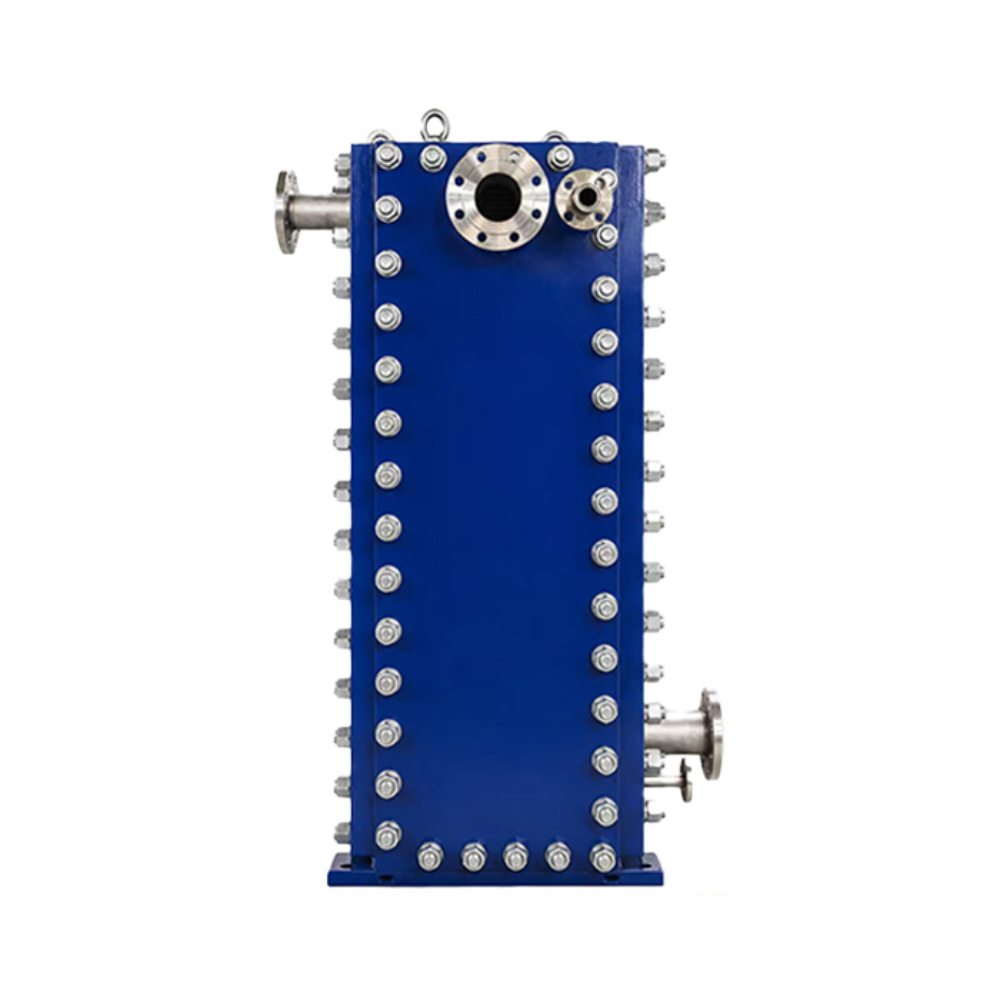
Four-Side Detachable Fully Welded Heat Exchanger
I.
Fully welded units are temperature- and pressure-resistant but cannot be opened; detachable units can be opened for cleaning but cannot withstand high temperatures. Can we have both?
This question has troubled the plate heat exchanger industry for many years. The answer is actually not complicated: assign “welding” and “detachability” to two different parts—weld the places that should be permanently sealed, and leave an access path where disassembly is needed.
II. What Contradiction Does It Resolve?
Model Sealing method Temperature/pressure resistance Mechanical cleaning possible?
Detachable type Rubber gasket ≤180 °C / ≤2.5 MPa Yes; open and brush-clean
Fully welded type Fusion welding Up to 400 °C / 4.0 MPa Chemical cleaning only
Four-side detachable fully welded type Plate bundle fusion welding + detachable connection Relatively high temperature/pressure resistance Plate bundle can be withdrawn for mechanical cleaning
This contradiction has caused considerable trouble. Many working conditions in chemical plants are like this: material temperature above 200 °C and pressure above 2.0 MPa, so gaskets cannot last; but the material is also prone to fouling and must be brushed every six months—a purely fully welded unit can only rely on chemical cleaning, which may not clean thoroughly; the gasket in a detachable type cannot withstand it either. As a result, shell-and-tube heat exchangers had to be used, trading volume and efficiency for maintenance convenience.
The four-side detachable structure is designed to fill this gap.
III. Structural Principle
The core idea is to allocate structure according to function:
Plate pack: Corrugated plates are sealed by fusion welding to form the heat exchange core. The medium flows inside the core and does not contact rubber parts, so it is not limited by the temperature resistance, pressure resistance, or compatibility of gaskets.
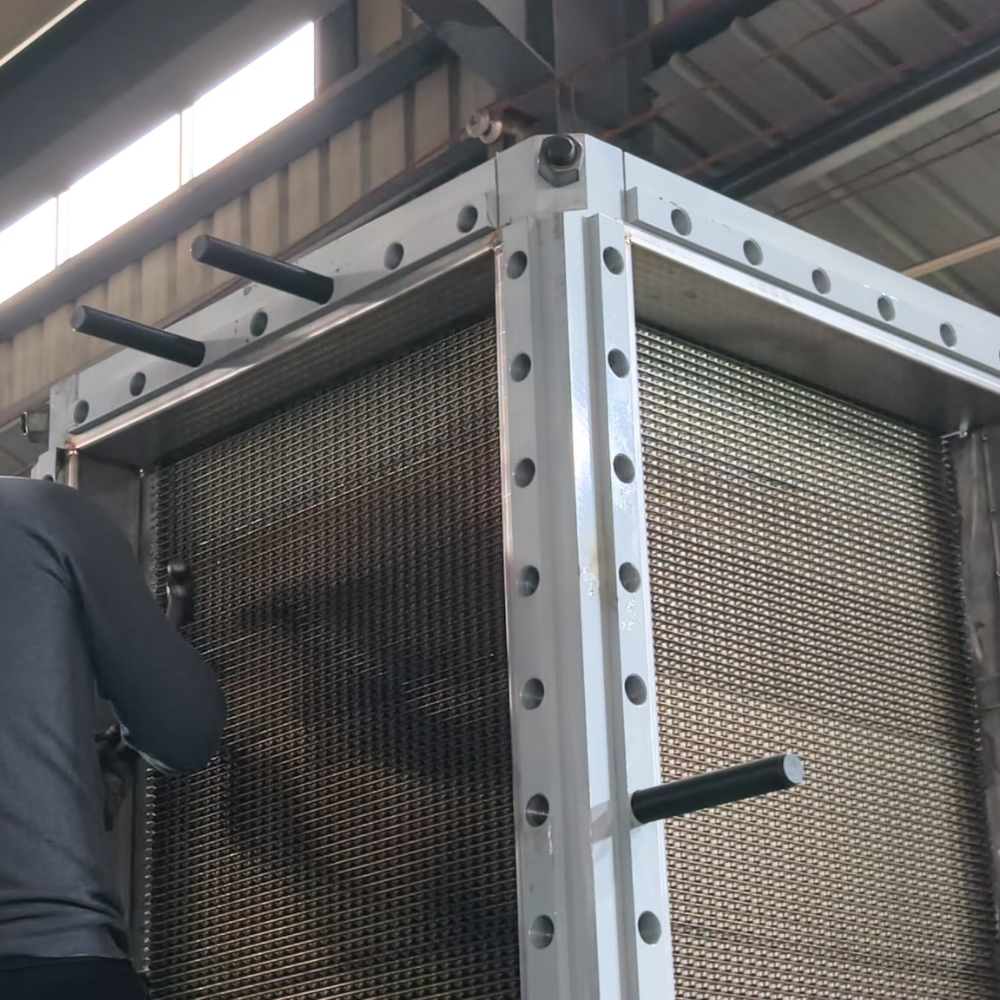
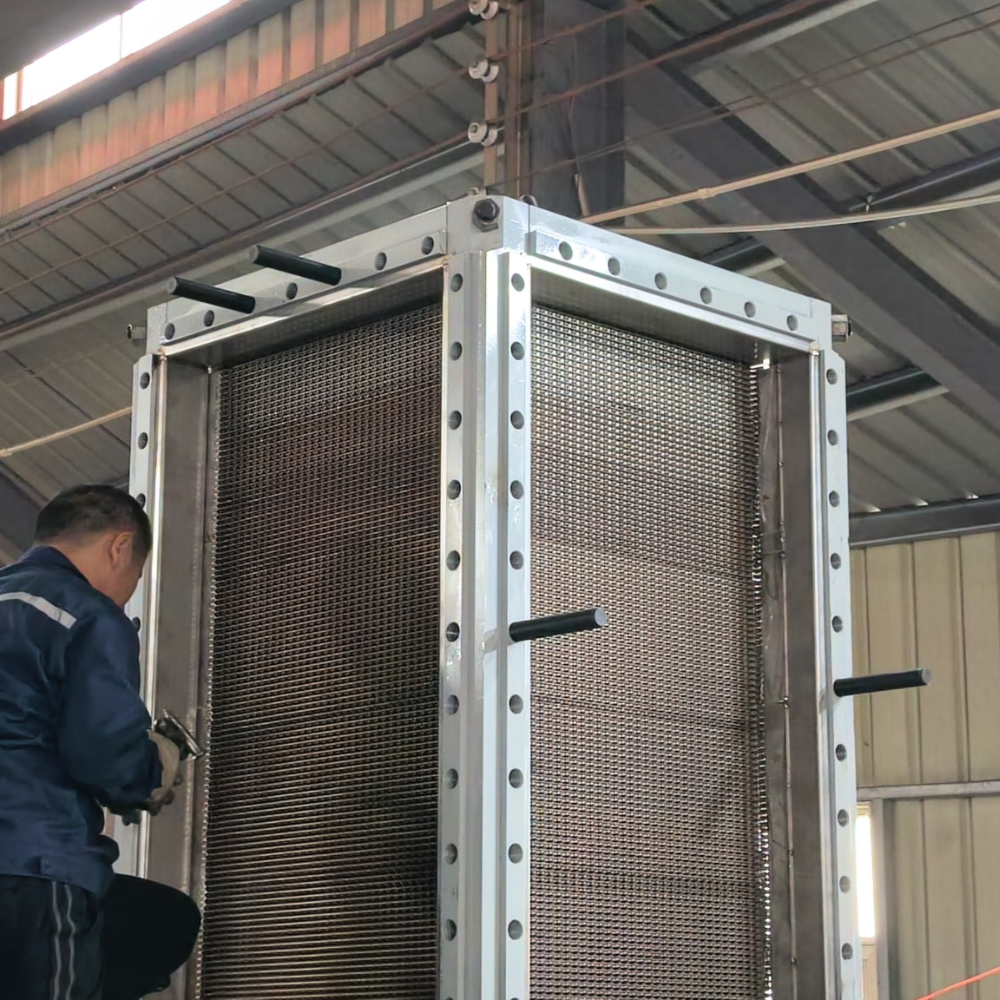
Core and frame: The plate bundle is installed as a whole into the frame and fixed by a clamping device. After releasing the clamping device, the plate bundle can be withdrawn from the frame as a whole.
Detachable connection: A detachable connection is used between the plate bundle and the nozzles. This is the part that realizes “detachability” and also the part that requires periodic inspection.
After withdrawal: The surface of the plate bundle can be mechanically cleaned or high-pressure water flushed to remove fouling layers that are difficult to remove by chemical cleaning.
In one sentence: welding is responsible for sealing reliability, and detachability is responsible for maintenance accessibility; the two tasks are borne by two separate parts.
It should be noted that the detachable connection uses seals, so the overall temperature and pressure limits of the unit will be slightly lower than those of an integrally welded structure. The specific values are subject to the technical scheme and drawings, and actual parameters should be confirmed during selection.
IV. Technical Parameters (Design Reference Values)
Item Range
Heat transfer area per plate 0.05–3.0 m²
Heat transfer area per unit 1–1200 m²
Plate thickness 0.5 / 0.6 / 0.8 / 1.0 mm
Channel width 2.0–4.0 mm
Design pressure 1.6–4.0 MPa (determined by structural scheme)
Design temperature −30–350 °C (determined by sealing material)
Heat transfer coefficient 3000–6000 W/(m²·K) (reference value for water-water conditions)
Capacity per unit 1–2000 m³/h
Applicable standards GB/T 151 Heat Exchangers; export projects can be executed according to agreed standards
The parameters are conventional ranges. Actual values are subject to working condition calculations and the technical agreement. The sealing material for the detachable part must be selected separately according to the medium and temperature.
V. Material Selection
Material Applicable conditions
304 Neutral media, clean water; not suitable for high-chloride conditions
316L General chemical media, weak acids and alkalis; contains molybdenum for pitting resistance
321 High-temperature conditions; intergranular corrosion resistance
2205 duplex steel Chloride-containing and sulfur-containing media; stress corrosion resistance
254SMO High-chloride, strongly corrosive media
Titanium plate Seawater, hypochlorite, and other oxidizing media
Material selection requires the simultaneous provision of chloride ion concentration, maximum temperature, and pH value; none of the three can be omitted.
VI. Welding and Quality Control
Stage Control content
Plate forming Control of corrugation depth and springback accuracy to ensure uniform weld seam gap
Pre-weld treatment Ultrasonic cleaning to remove oil and avoid weld porosity
Welding Mainly fiber laser welding, with a small heat-affected zone and small deformation; TIG for thick plates and repair welding
Post-weld Pickling and passivation to restore corrosion resistance
Inspection Air tightness and hydrostatic tests for each unit; helium leak test added for critical conditions; penetrant testing as required
Assembly Frame clamping dimensions controlled according to drawings; rechecked after multiple extraction/installation cycles
Maintenance note: after each withdrawal of the detachable structure, both the seals and the clamping dimensions need to be checked. This is not a defect but a normal maintenance requirement for this type of structure—what it buys is mechanical cleaning capability. This maintenance cost should be included in the selection.
VII. Manufacturing Capabilities of Shanghai Jiangxing Chemical Equipment Co., Ltd.
This product deserves separate mention because it sits in a category gap:
Manufacturers that only make detachable types do not have the process accumulation for plate fusion welding.
Manufacturers that only make fully welded types do not have design experience with frame structures and detachable seals.
The four-side detachable fully welded type, however, requires both at the same time.
Our capabilities:
In-house plate pressing
Equipped with a 10,000-ton hydraulic press, plates and pressed parts are produced in-house. Plate forming accuracy directly affects weld seam uniformity. With this step under our own control, modifications and replacement parts do not need to wait for outsourced scheduling.
Parallel multi-category manufacturing capability
We can provide fully welded, four-side detachable, gasketed, and brazed plate heat exchangers, as well as plate-and-shell, shell-and-tube, volumetric, spiral wound, finned tube, and spiral plate heat exchangers. During selection, we can give model-matching recommendations based on working conditions, without having to force a match within a single category—this is the practical value of multi-category manufacturing.
Systems and qualifications
We have passed ISO 9001 quality management system certification and obtained CE certification, with export compliance qualifications.
Export experience
With 11 years of export experience and products covering more than 80 countries and regions, we are familiar with export processes such as documentation, packaging, and third-party inspection.
Specification accumulation
We currently have more than 390 product specifications. Non-standard customization can be adjusted on this basis, reducing the time required for new tooling.
One honest note: the weld seams of this type of equipment cannot be welded on site, and repairs must be returned to the factory. Therefore, when choosing a supplier, technical response speed and spare parts policy are as important as price. When requesting a quotation, it is advisable to ask directly about the repair turnaround time.
VIII. Typical Applications
Chemical and petrochemical: reactor cooling, overhead condensation, solvent condensation, steam condensate waste heat recovery
Fine chemicals: heat transfer oil systems, high-temperature material heat exchange, cooling of fouling-prone materials
Pharmaceuticals: heat exchange links where no rubber parts contact the medium; process cooling requiring periodic cleaning
Metallurgy: heat exchange in pickling processes, emulsion cooling
Power: oil coolers, auxiliary equipment cooling
Food: high-temperature sterilization and waste heat recovery
Selection criterion: the temperature or pressure exceeds gasket capability, and at the same time the medium is prone to fouling and requires periodic mechanical cleaning—when both conditions hold, this is its most suitable scenario. If only one condition is met, a purely fully welded or detachable type may be more economical.
IX. Frequently Asked Questions
Q: After the plate bundle is withdrawn, do the seals need to be replaced?
After each extraction/installation, the condition of the seals and the clamping dimensions need to be checked. Whether replacement is needed depends on the inspection results. This is routine maintenance for detachable structures.
Q: Is the temperature/pressure resistance lower than that of a purely fully welded type?
The detachable connection uses seals, and their temperature and pressure resistance will limit the upper limits of the entire unit. Specific values are determined by the sealing material and structural scheme. If the working conditions exceed this range, an integrally welded structure should be selected.
Q: What are the advantages compared with shell-and-tube?
For the same heat duty, the volume is smaller, the heat transfer coefficient is higher, and the end temperature difference is smaller. In retrofit projects with limited space, this difference often determines whether the equipment can fit.
Q: Can non-standard customization be provided?
Yes. We can select and draw according to working condition parameters, or process according to customer drawings. Plate type, pass arrangement, nozzle orientation, and material are all configurable.
Q: What are the requirements for cleaning methods?
For chemical cleaning, use low-concentration citric acid or nitric acid; chlorine-containing cleaning agents must not be used. For mechanical cleaning, high-pressure water or a soft brush can be used, avoiding damage to the passive film on the plate surface.
COMPANY PROFILE

Founded in 2010.Shanghai Jiangxing Chemical Equipment Co.,Ltd. is located in——Shanghai,China. We specialized in manufacturing series of plate heat exchangers, fully weldedheat exchangers,heat exchanger units, replacements of plates and gaskets,brazed plate heatexchangers. Our plate heat exchangers are quality reliable and equivalent to the products fromworld well-known manufacturers. We also supply high quality OEM heat exchanger gaskets( EPDM, NBR & VITON ) and heat exchanger plates(Stainless Steel, Titanium, Hastelloy ) forplate heat exchanger ordinary maintenance.
EXHIBITION & CUSTOMER

CERTIFICATES

Why Choose Us

FAQ
1.Can l have your samples?
Yes, we can provide samples for you to check our quality.
2. What is your leading time for the products l need?
enerally 7 working days. lt depends on the quantities you request.
3.Do you have your own factory?
Yes, welcome to visit our factory and check our products.
4. What is the warranty for your products?
We provide one year warranty for all the items we sold.
5.What payment terms do you accept?
Trade Assurance/TT/ Letter of Credit/ Western Union
